ESG Materiality Assessment: How to Run One Without a Consultant
The standards do not ask for a matrix. Here is what the process looks like when it is one person doing it around a day job.
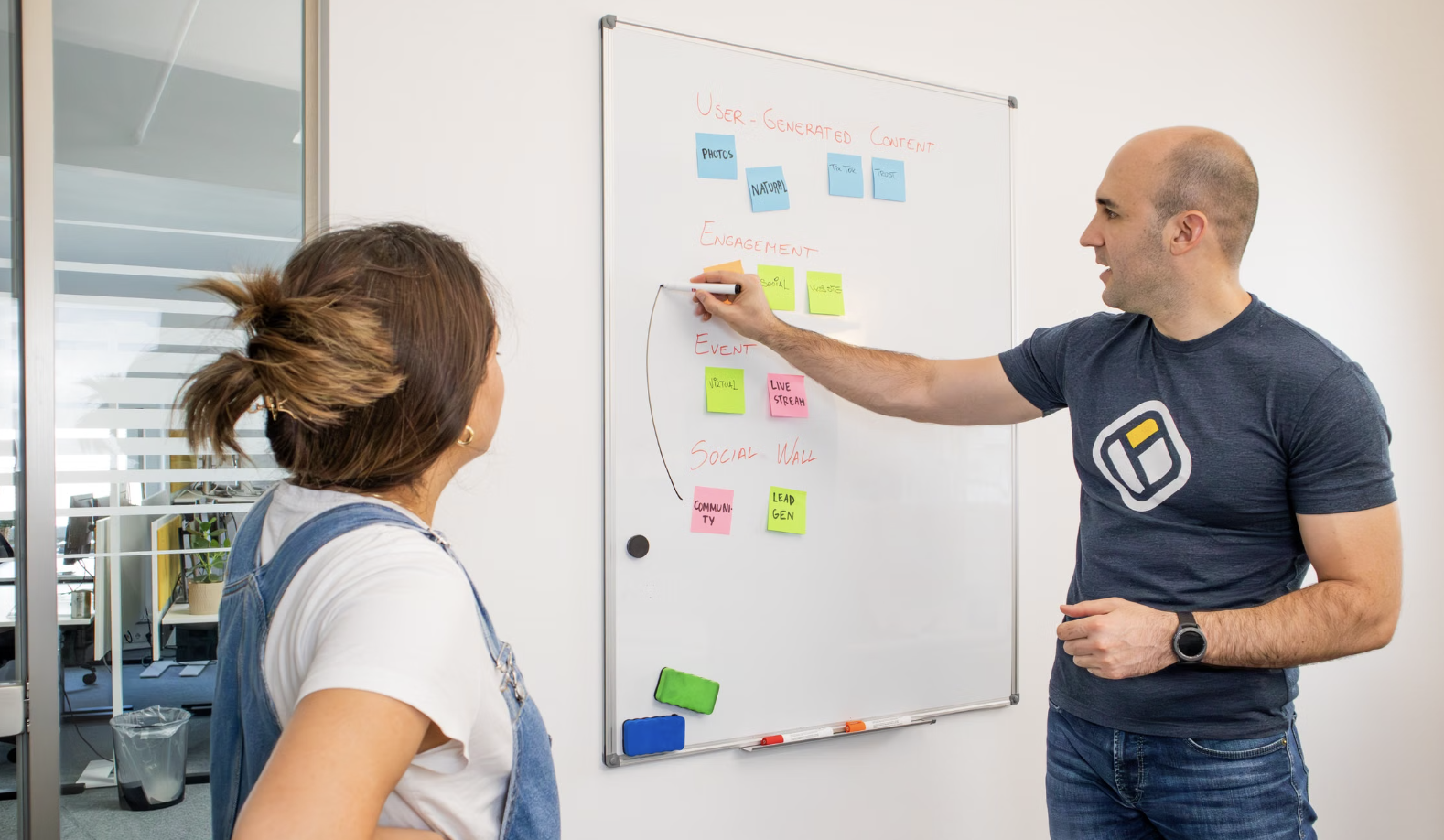
Most published guidance on the ESG materiality assessment assumes a project team with a stakeholder engagement budget behind it. A lot of companies have neither. They have one person, hired recently, holding the whole sustainability remit alongside something else.
That situation came up on a recent call. An outgoing sustainability lead was handing over to a new colleague and wanted to talk about materiality before she left. Her description of how it had been done in the past was blunt. Very, very manual, and consultant-led. The reason it had not happened again was resource. It is a one-person team, and a one-person team cannot run a six-month engagement.
So the useful question here is a practical one. What does an ESG materiality assessment look like when nobody is available to run it for you?
What is an ESG materiality assessment, and what does it produce?
An ESG materiality assessment is the process of working out which sustainability topics matter enough to your business and your stakeholders to be worth reporting on and acting on. The output is a prioritised list of topics, plus the reasoning behind the priority order.
Note what is missing from that description. There is no picture in it. GRI 3: Material Topics 2021 sets out a four-step process: understand the organisation's context, identify actual and potential impacts, assess the significance of those impacts, then prioritise the most significant for reporting (Source: GRI, 2021). What it asks you to disclose is the process you used and the list you arrived at. IFRS S1 takes a different lens, focusing on risks and opportunities that could reasonably be expected to affect an entity's cash flows or its cost of capital, and it also asks for reasoning rather than artwork (Source: IFRS Foundation, 2023).
Do the standards actually require a materiality matrix?
No. The two-axis matrix is a presentation convention. It became the visual shorthand for the exercise, and somewhere along the way it became the deliverable.
This matters more than it sounds. When the matrix is the deliverable, the work gets optimised around producing a defensible-looking chart. Topics get nudged along an axis so the picture reads well. The scoring logic that placed them there lives in a spreadsheet nobody opens again. A year later the company has a slide and no way to explain it.
The reusable asset is the layer underneath: each topic, why it scored the way it did, who inside the business owns it, and what evidence supports the claim. That mapping is what gets used again when a customer questionnaire lands, when an investor asks, when a tender needs answering, or when the reporting cycle comes round. The picture is optional. Almost every guide on the first page of Google for this term leads with it anyway.
Why does the process cost so much when a consultant runs it?
Coordination is the expensive part. Identifying candidate topics is largely a desk exercise. SASB Standards already map the sustainability issues most relevant to investor decision-making across 77 industries, and the Materiality Finder lets you look up your own (Source: IFRS Foundation, 2025). GRI's Sector Standards cover a prioritised set of high-impact sectors on similar logic (Source: GRI, 2024). The starting list is mostly available before anyone speaks to a stakeholder.
The hours go elsewhere. Scheduling interviews with people who cancel. Chasing survey responses. Reconciling what two departments said about the same topic. Getting it approved. The AA1000 Stakeholder Engagement Standard is explicit that engagement quality depends on inclusivity and on integrating what you hear back into decisions (Source: AccountAbility, 2015), and that integration step is where the time disappears.
A one-person team usually has the judgement the exercise needs. What it lacks is the weeks of chasing that sit around it. That is also why sustainability consultancies can charge for this work at all.
How do ESG agents change this for a small team?
They move the coordination off the person and leave the judgement with them. That is a narrower claim than "AI does your materiality assessment", and it is the one that holds up.
An agent can assemble the candidate topic list from your sector's standards, draft the stakeholder questions, send and chase the requests, group the responses by topic, flag where two departments contradict each other, and keep every answer attached to its source. What it should not do is decide what your material topics are. The standards expect a documented human rationale.
That is the job Ella, our AI ESG agent, is built for. Ella keeps the topic-to-owner-to-evidence mapping live rather than frozen in a deck, so the same structure feeds carbon reporting under the GHG Protocol Corporate Standard (Source: GHG Protocol, 2004) and the next customer questionnaire without being rebuilt from scratch. Ella is an AI ESG agent that completes sustainability, carbon and compliance work rather than only tracking it.
How do you run the assessment when it is just you?
Start narrow and write down the reasoning as you go.
Pull the candidate topic list from your sector's SASB and GRI standards. Cut anything obviously irrelevant to your business model.
Pick six to eight internal people who between them see customers, operations, suppliers, finance and staff. Ask each of them the same short set of questions in writing rather than convening a workshop.
Add the external voices you already have. Customer questionnaires, tender responses, investor requests and complaint themes are stakeholder input that arrived for free.
Score each topic on two things: how significant the impact is, and how much it affects the business. Write one sentence per topic explaining the score. That sentence is the asset.
Assign an owner to each of the top topics. A topic with no named owner will not move.
Publish the list and the method. Skip the matrix unless someone specifically asks for one.
That version is achievable in weeks by one person. It will be less polished than a consultant-run process. It will also be yours, and you will be able to explain it in nine months when somebody asks.
What happens to the assessment when the person who ran it leaves?
Usually it stops being usable. The list survives in a PDF. The reasoning does not, because it was never written down anywhere the next person can find.
This is the strongest argument for keeping the assessment as structured, owned data rather than a document. On that handover call, the outgoing lead's instinct was right. Get the incoming person into the process before the context walks out of the door. Most companies do not manage that. An AI ESG agent that holds the topics, the scores, the owners and the evidence gives the next person something to inherit. The same logic applies to any ESG work that sits with one named individual.